 I have a Brain Tumour…
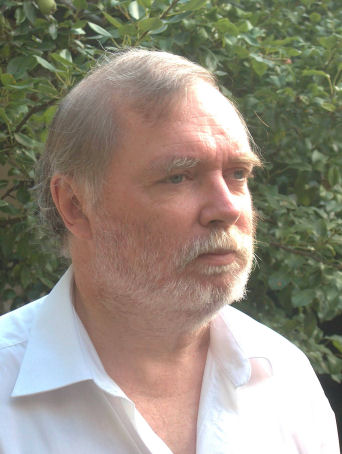
Frank Boeye
My name is Frank and I live in Belgium, a little country lying on the North Sea and facing England. I was born on July 20 in 1953.
During my youth I was a mountaineer and I climbed such mountains as for instance the Eiger North Face in Switzerland, or the Nevado Huascaran, the highest peak in the Peruvian Andes.
After twenty five summers and winters spent in the Alps and Andes I converted to sailing. In 1991, together with my wife, we sailed around the United Kingdom.
Our daughter Aster was born in November 1993.
During the spring of 1997 I felt nausea for a short while every morning, especially when I brushed my teeth. I was often perspiring, and once I experienced a decreased consciousness. I attributed these symptoms to professional stress and a Post Traumatic Stress Syndrome after evacuating the boarding school where I was headmaster due to a beginning fire in the cellar.
In the summer I would regain my equilibrium, so I thought, enjoying a little Channel sail to the Seine Bay and the Fields of Normandy.
On the way back, in the harbour of Duinkerke, France, on August 7, I got my first epileptic fit in the morning. The focal insult began in my right shoulder and neck and generalised quickly to a “grand mal”. Five days later I suffered a far heavier fit entering the harbour of Breskens, not far from Flushing in the Netherlands. One fit was immediately followed by the next without regaining full consciousness. This syndrome is called a “Status Epilepticus”, an epileptic kind of coma, and it is always life-threatening. The sailing holiday was obviously over…
On Friday August 15 I went to see an oncologist which I knew in the Middelheim Hospital in Antwerp. He immediately took me in and I had to remain at the department of neurology. Next Monday a MRI-scan was taken. Here it could easily be seen that I had a brain tumour, left high parietal. Its diameter was between 3 and 4 centimetres, and was surrounded by an oedema on 3 sides, and a diffuse aspect on the fourth side. Maybe this was the beginning of an invasion of sound tissue. Fortunately the tumour was accessible. It was removed by a neurosurgeon effectuating a craniotomy. During operation he made use of my reactions, thus I was not sedated anymore, but I do not remember anything of it. The surgery took 7 hours. Waking up afterwards I had to move my arms and legs. It was OK, but in the right part of my body it was much more difficult to react. Anyhow there was no big damage, which certainly could have happened.
The moral counsellor visited me very briefly. She would accompany me psychologically during the long recovery in hospital.
A few days later the surgeon arrived with the pathologist’s verdict. It was no good news at all. It was a high grade anaplastic astrocytoma, already showing some necrotic fields and becoming rapidly a glioblastoma multiforme, the most awesome type of brain tumours. The surgeon told me that the situation continued to be life-threatening and he recommended me to get 30 sessions of 2 Gy of radiotherapy once the wounds had healed a little. The reason is that he was not able to guarantee that all the cancer cells were removed, despite using the most advanced techniques of stereotaxis, mapping and microsurgery. Of course I agreed to it and underwent the surrealistic surroundings and techniques of radiotherapy during 6 weeks. It caused light headaches and disturbancies of equilibrium, but I was not to sick of it.
Even with this standard treatment for high grade tumours I had only a life expectancy of 9 to 15 months. In 1997 adjuvant chemotherapies were still in its infancy. The surgeon knew of American colleagues that some of the tumours had receptors for EGF (Epithel Growth Factor, Estrogen Growth Factor). He had heard that some patients had reacted well to the anti-estrogen Tamoxifen in high doses, a treatment that was developed for breast cancer, which may also be caused by EGF. He added that the secondary effects were usually not heavy and he advised me to try it out. And now, 9 years later, I am still alive, and doing well. Initially the drug was not refunded by health authorities in Belgium (now it is for 75 % by the Extraordinary Solidarity Fund, BSF). During that period I was inscribed in a program of Astra Zeneca. I am very grateful for that !
I was lucky having been treated by a very competent team of neurologists, neurosurgeons, oncologists, radiotherapist, psychologist and nurses. I dare to say that the psychological follow-up is as important as the surgery. Of course you would stay no chance without the latter, but without the moral aid I do not know if I would have had the force to continue fighting. Also having a loving wife and a daughter of only 3 years was a great stimulus. Also my surroundings in general did not let me down.
The smooth signs of paralysis on my right flank disappeared, thanks to healing gymnastics and thalassotherapia. I remain epileptic, but this is generally under control due to the daily intake of fenytoin. I still got mild symptoms of loss of concentration, and I feel permanently fatigued. It takes a lot of will-power to engage in an activity, but once started, it is OK for an hour or two.
Alas I may not drive a car anymore, nor can I take a ride on a bike because the repetitive movement of the legs induces epileptic insults after a while.
On the social side I was not so lucky. I did not succeed returning to my loved work as headmaster, and this implied the loss of 50 % of my income, while cancer implies a rise in expenses. But we can manage the problem.
Since November 2005 I have build a patient supporting and advocacy group for brain tumour patients in collaboration wit the International Brain Tumour Alliance (IBTA, www.theibta.org) and with all the people who have helped me so well since 1997 . It has gained official status in May 2006 under the name “Werkgroep Hersentumoren vzw”, Task Force Brain Tumours,
www.wg-hersentumoren.be . We are the first brain tumour group in Belgium.
Frank Boeye
Werkgroep Hersentumoren vzw
Gasstraat 5
B-2950 Kapellen
Belgium
Tel: ++32 495 303 511
Email: info@wg-hersentumoren.be
Site: www.wg-hersentumoren.be
Update 2/12/2011
I can fortunately state that I am still doing well. The last MRI taken on 24 January 2011 was not so good. The radiologist saw a new object, but during a second opinion made by the team who treated me in 1997 said that the situation has remained stable. For security reasons a PET-scan will be taken on next Wednesday, but I am confident.
The last few years I have been active in building a patient oriented brain tumour group in Belgium: the "Werkgroep Hersentumoren vzw – Study Group Brain Tumours". We work in close collaboration with the International Brain Tumour Alliance (IBTA) and the European Cancer Patient Coalition (ECPC). Together with Mrs Kathy Oliver of the IBTA I am a member of the working party on rare cancers inside ECPC.
Last year showed a lot of activity:
- We have organized a "Round Table about Treatment and Support of Brain Tumour Patients and their Families in Belgium." This round table united all actors of the brain tumour community in Belgium, and also an international delegation (Mrs Kathy Oliver). Please do find the conclusion of this activity, and the list of participants' in attachment. Feel free to make use of this documents. You will see that the method used by the Al Musella Foundation was one of the inspiring elements.
- Finally we succeeded in getting Avastin as a rescue treatment for patients who do not react (anymore) to temozolomide. We have also used the arguments of Al Musella which he employed with the FDA. This event has obliged the “European Medicines Agency” to reconsider its dogmatic approach following the clinical trials directive, which is ineffective for rare cancers.
As you can understand it is of the uttermost importance to have worldwide contacts. It gives us the inspiration to open a fundamental debate and ask authorities to implement new insights.
For me personally, I am glad to have had the opportunity to see our only daughter, who will go to Brussels University next September. Please find a picture of us both during a journey to northern Italy (Lake Garda) in August 2010.
If you do have more questions I will be glad to respond. I have the greatest respect for the work your organization is doing.
Update 3/30/2012
I am still alive and fighting against a new tumor. I had a partial resection on December 30, 2011 and am currently being treated with Avastin, which commenced on January, 21, 2012. Prior to the recurrence, I was on Temodar from August until December, 2011 and things had been pretty stable. I have had some difficulties controlling seizures and was hospitalized a couple of times in late December and early January. My seizure medications have now been adjusted. I still struggle with right side weakness and am currently getting treatment at a rehabilitation center.
